Fascia is a continuous, viscoelastic tissue forming a three-dimensional matrix that surrounds muscles, organs, tendons, and bones. According to fascia researcher Luigi Stecco, fascia uniquely adapts under stress (plasticity) and regains elasticity through manipulation (malleability).
“Fascia is the only tissue that modifies its consistency when under stress (plasticity) and which is capable of regaining its elasticity when subjected to manipulation (malleability)” (2004)
While its precise definition is still debated, fascia can be considered an organ due to its diverse functions based on location. For instance, muscle fascia differs in role from renal fascia. Although uninterrupted, using specific nomenclature like “myofascia” helps clarify the area of focus.
Myofascial Treatment Approaches
Muscles and fascia are inseparable; treatment addresses both simultaneously.
Techniques include:
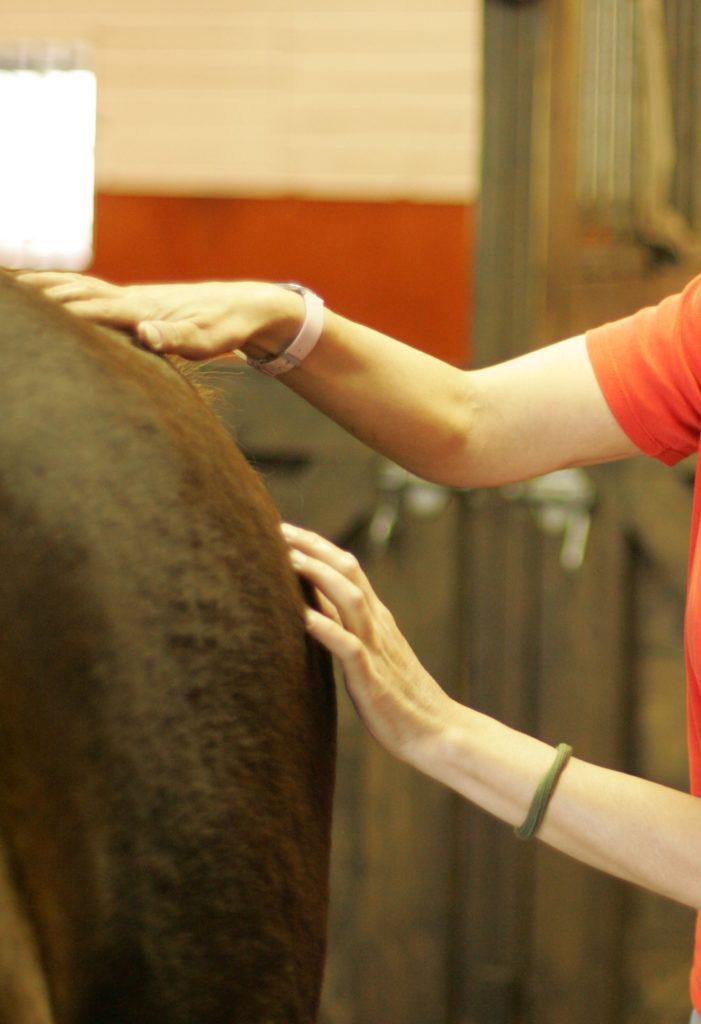
- Equine Fascia and Trauma Release Therapy (EFTR®) – Developed by Liza Kimble, this method helps release physical and mental tension in horses by addressing stored stress and trauma, such as relocation, ownership changes, or herd loss.
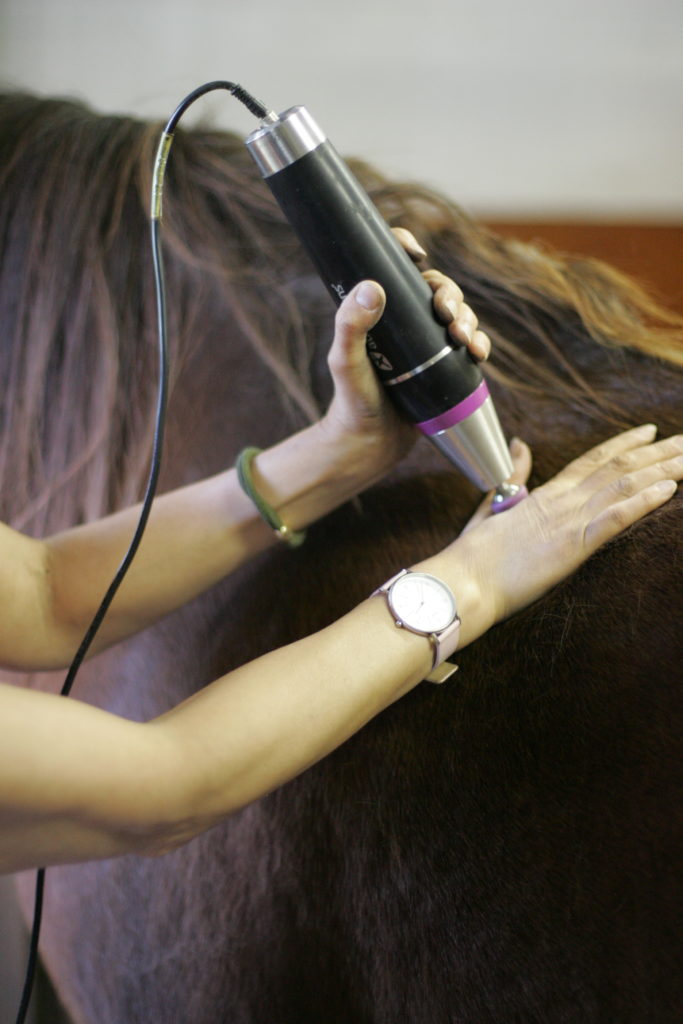
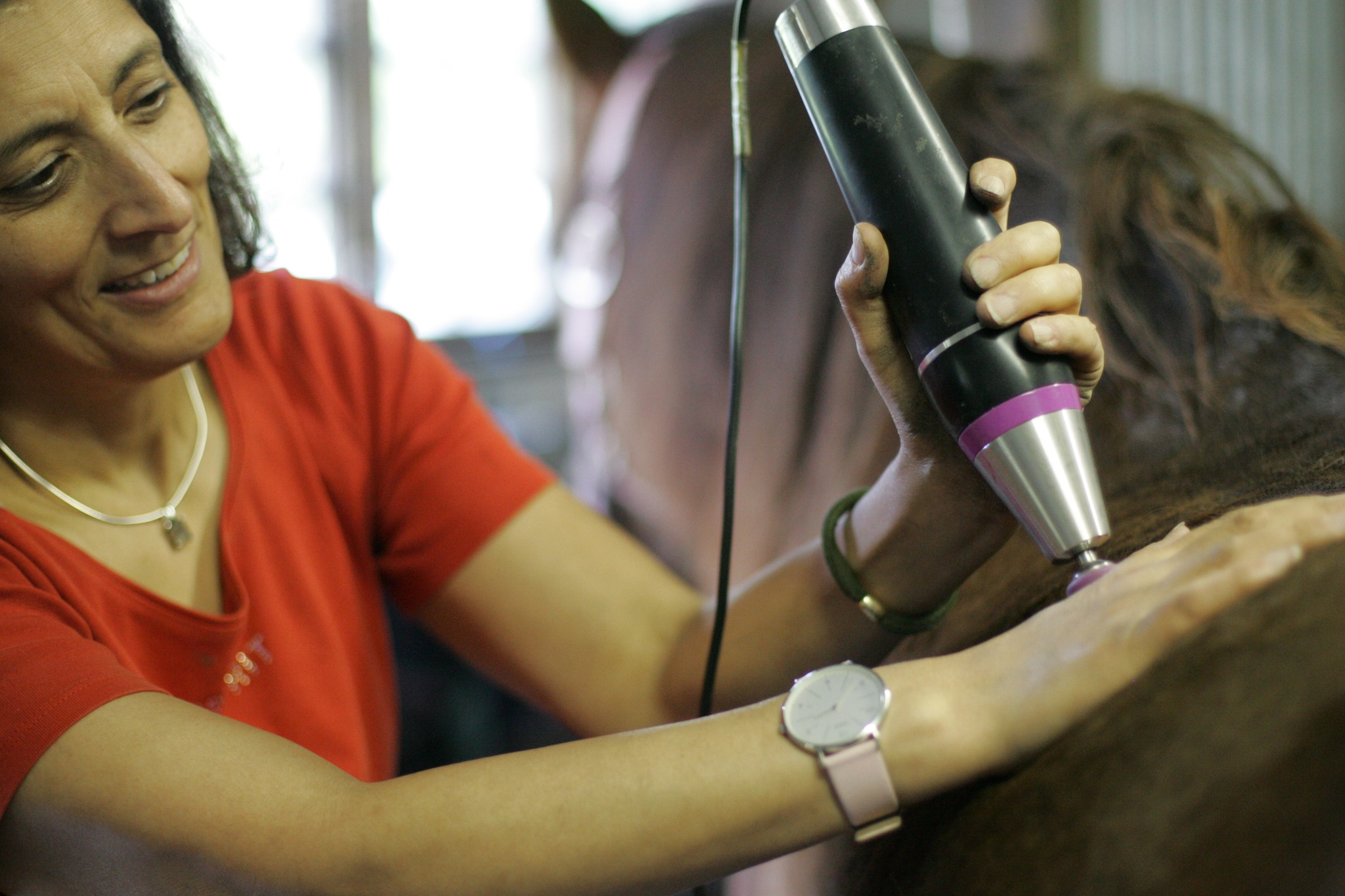
- Vibration Therapy – Applying patterned vibrations with handheld devices like Atlasbalans to relieve severe muscle tension.
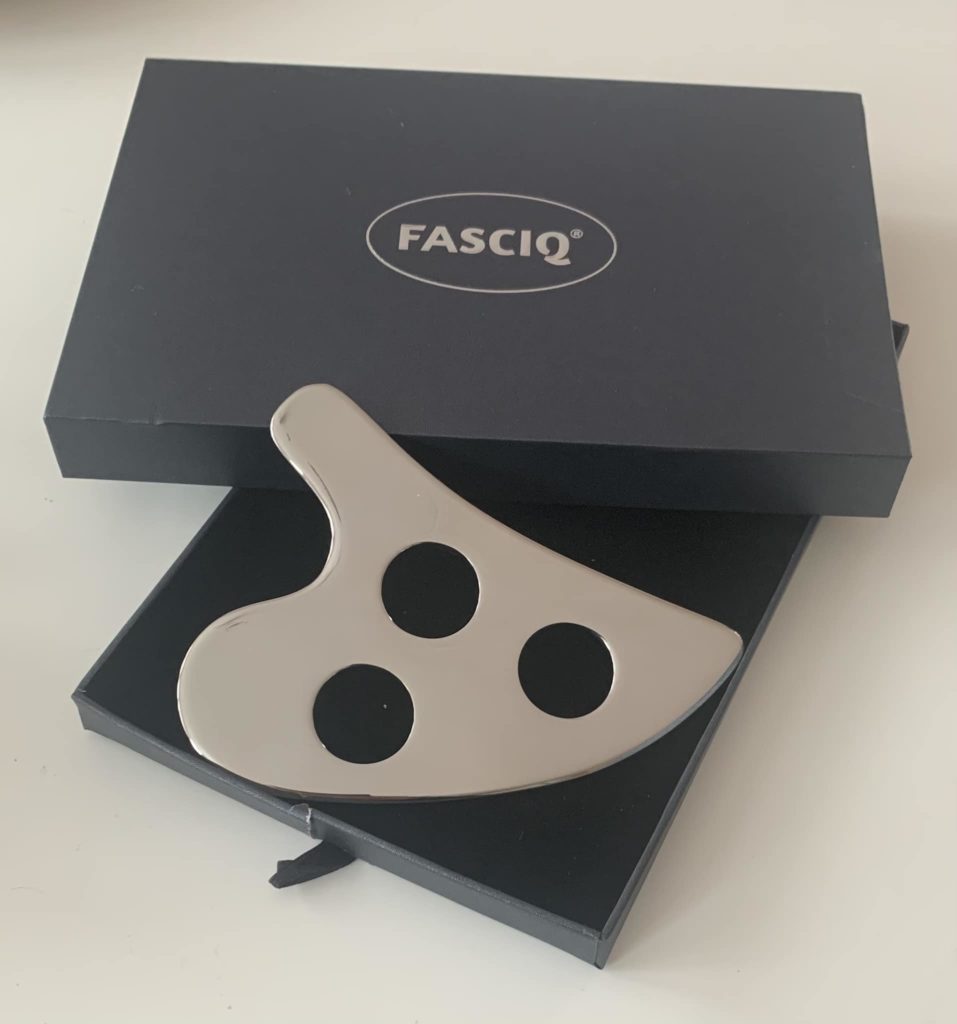
- Manual Myofascial Tools – Using specialized instruments such as Fasciq® tools for targeted release.
These approaches aim to restore balance, reduce tension, and improve overall well-being.
Back to My Treatment Methods